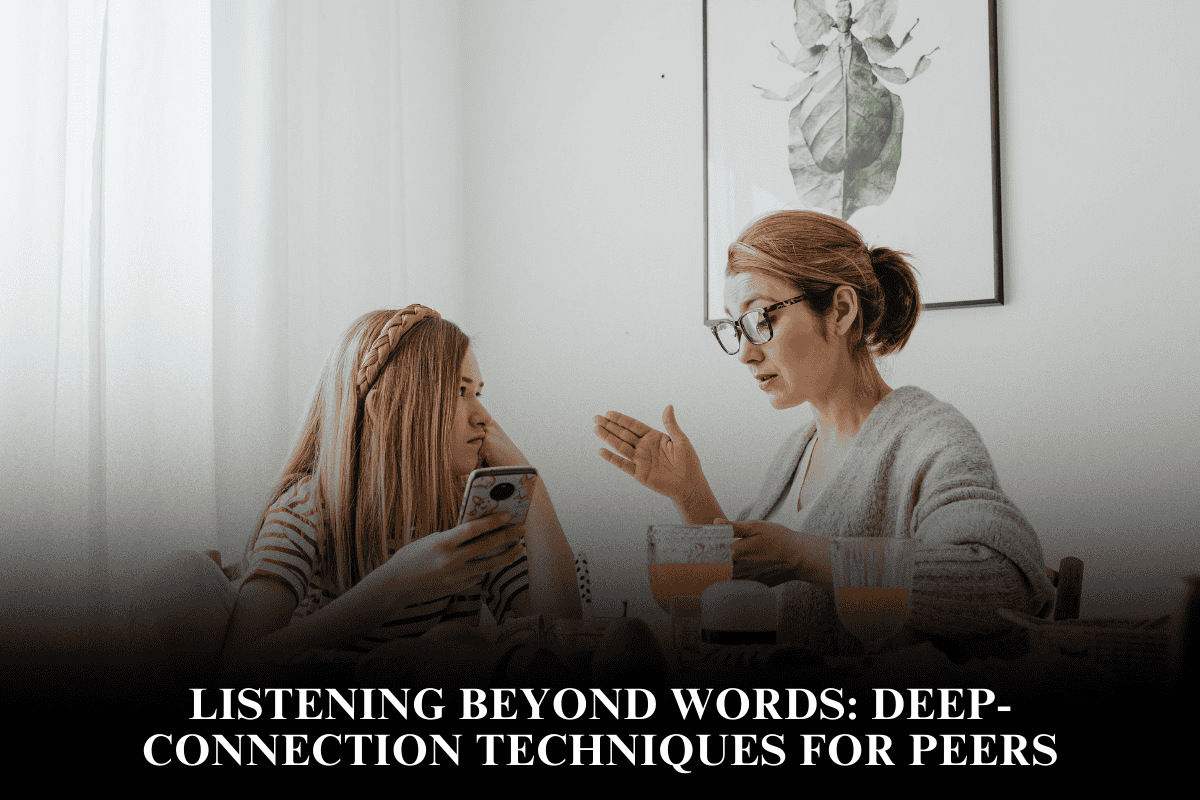
Deep-connection listening goes beyond hearing words to fully attending to emotions, body language, and unspoken cues, fostering trust and healing especially among peers supporting trauma recovery. This approach creates safety by validating experiences without judgment, helping peers feel seen and reducing isolation. In peer settings, it builds mutual empathy, activates oxytocin for bonding, and calms the nervous system via parasympathetic responses.
Core Techniques
Active listening forms the foundation: give undivided attention, avoid interruptions, and use nonverbal cues like nodding to signal presence. Reflective listening mirrors content and feelings—”It sounds like you’re feeling overwhelmed”—to confirm understanding and deepen exploration. Empathic listening connects emotionally, acknowledging pain without fixing, which supports somatic awareness of tension or breath changes.
Nonverbal and Somatic Focus
Observe subtle signals like posture shifts, facial micro-expressions, or voice hesitations that reveal unvoiced trauma responses such as freeze or fawn. Maintain open body language—uncrossed arms, steady eye contact at comfortable levels—to convey safety. In peer groups, mirror calm breathing to co-regulate stress, promoting nervous system harmony essential for vulnerability.
Practical Applications for Peers
- Practice silence after sharing to allow processing, resisting the urge to advise.
- Use “I hear” statements to validate: “I hear the hurt in your voice.”
- Incorporate grounding pauses, like shared deep breaths, for real-time regulation.
- In group settings, rotate speaking turns to ensure equal voice and prevent dominance.
Regular mindfulness builds these skills, enhancing clarity and emotional release for all involved.
Benefits in Peer Support
This listening strengthens resilience, facilitates emotional processing, and empowers peers to reclaim narratives without overwhelm. It transforms interactions into healing spaces, improving communication and confidence long-term.
FAQ
What distinguishes deep listening from regular conversation?
Deep listening attends to emotions, body cues, and silence beyond words, creating validation and safety rather than just exchanging information.
How does reflective listening build peer connections?
By paraphrasing feelings and content, it shows true understanding, encouraging deeper sharing and trust without judgment.
Why focus on nonverbal cues in trauma peer support?
They reveal unarticulated trauma responses like tension or hesitation, allowing empathetic responses that regulate the nervous system.
Can deep listening reduce stress in peer groups?
Yes, it releases oxytocin for bonding and activates parasympathetic calm, countering cortisol from feeling unheard.
What if a peer interrupts during deep listening practice?
Gently redirect with “Let’s hear them fully first” to model presence and reinforce group safety norms.
How to develop these skills daily?
Practice mindfulness, reflect post-conversation, and seek feedback in safe peer circles for ongoing refinement.