In bustling coworking hubs of San Francisco and Chicago’s tech corridors, a quiet revolution is taking shape—one that’s redefining how individuals grow professionally and how organizations thrive.
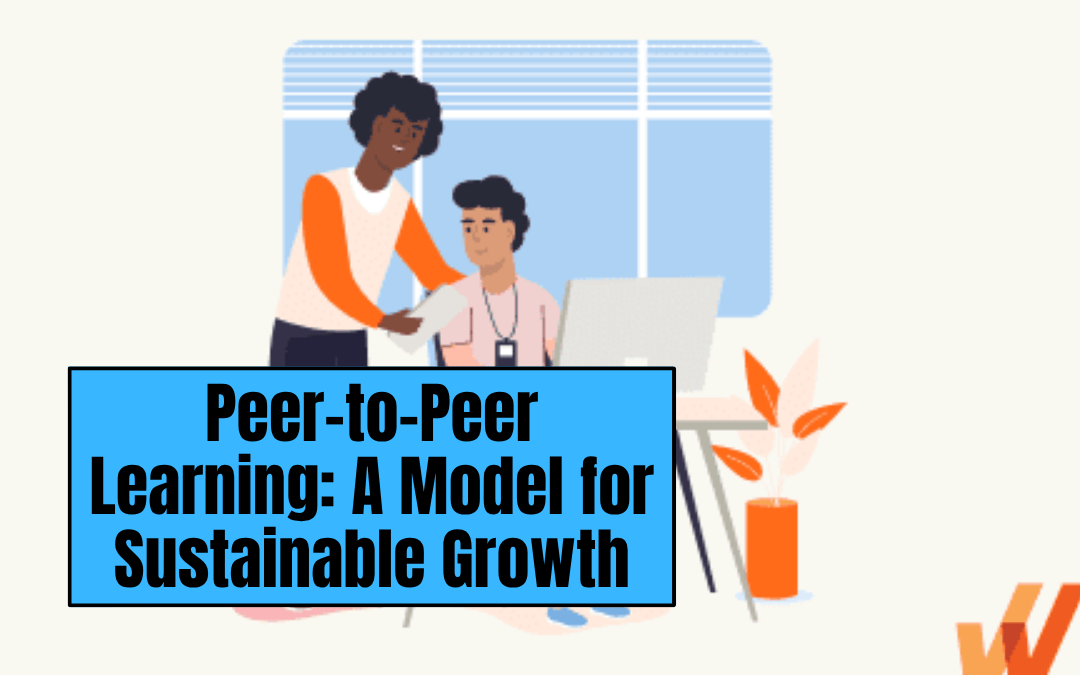
The approach is simple yet transformative: rather than relying solely on top-down corporate training, companies and communities are embracing peer-to-peer learning to fuel sustainable growth.
Across the United States, this movement isn’t just a trend—it’s becoming a strategic advantage. It empowers people to learn directly from each other, leveraging shared experience, context, and creativity to solve problems faster and build stronger workplace cultures.
The Rise of Peer-to-Peer Learning
Picture a Washington, D.C. nonprofit where junior staff teach colleagues new digital tools, or a New York media agency where senior editors host “teach-a-colleague” sessions on storytelling. These aren’t isolated experiments—they’re part of a growing shift toward collaborative learning ecosystems.
Research shows that nearly 70% of U.S. organizations now include peer-facilitated learning in their development strategies. Companies that adopt peer learning see an average 20% increase in engagement and 15% improvement in productivity year over year.
By moving away from rigid training modules toward shared knowledge and collaboration, organizations are unlocking growth that’s both cost-effective and deeply human.
Peer Learning in Action: Cities and Communities
In Austin, Texas, the city’s vibrant startup scene is proof that peer learning drives real results. A group of early-stage founders created a monthly learning cohort where each member led discussions on real challenges—fundraising, hiring, or scaling.
After a year, five out of six companies secured second-round funding, and the sixth achieved over $1 million in annual recurring revenue. The difference wasn’t an expensive consultant—it was shared, lived experience.
In Seattle, a global software company launched a peer mentorship rotation program, pairing employees across departments for six weeks. They meet weekly, set goals, and complete micro-projects together. The results? A 12% increase in retention and a measurable rise in internal promotions.
Whether in startups or established corporations, the pattern is clear: when employees learn from peers, they engage more deeply and perform better.
Building the Framework for Sustainable Growth
Organizations in Los Angeles, Boston, and beyond are now systematizing peer-to-peer learning in three key ways:
1. Creating structured but flexible learning pathways
Companies schedule regular peer-led sessions—like Boston’s “Peer Fridays,” where faculty and staff host workshops on data visualization, communication, or inclusive teaching. The structure keeps momentum, while flexibility ensures relevance.
2. Encouraging cross-functional collaboration
When people from different teams or backgrounds learn together, innovation follows. A Detroit manufacturing firm launched peer learning circles connecting factory workers with design engineers. Within one quarter, defect rates dropped 9%, driven by new process ideas born from cross-level collaboration.
3. Recognizing and rewarding peer leaders
Peer facilitators don’t have to be managers—they’re often employees passionate about sharing what they know. A Minneapolis health-tech startup offered small stipends and company-wide recognition to peer mentors. Within six months, internal information searches dropped by 30%, because people knew exactly who to ask.
These frameworks prove that peer learning isn’t accidental—it thrives when organizations intentionally design for collaboration, feedback, and recognition.
Why Peer Learning Works for the U.S. Workforce
The American workforce is more mobile, digital, and diverse than ever before. Employees expect rapid growth, flexibility, and meaningful engagement. Peer-to-peer learning meets all three demands. It’s immediate, contextual, and cost-efficient—qualities that traditional training often lacks.
It also aligns perfectly with hybrid and remote work models. In cities like Miami and Denver, where teams are distributed, peer learning bridges gaps and strengthens culture.
A recent AWS workplace report found that distributed teams practicing peer learning showed 27% higher collaboration scores than those relying solely on asynchronous tools.
In short, peer learning thrives because it turns connection into competence—and conversation into innovation.
From Learning to Lasting Growth
Peer-to-peer learning in the U.S. is far more than an employee development tactic—it’s a growth engine. From San Francisco to Philadelphia, companies are proving that when colleagues become co-learners and employees become educators, organizations not only adapt—they accelerate.
In an age where speed and relevance define success, peer learning offers something rare: sustainable, human-centered growth. When organizations tap into the collective intelligence of their people, they unleash a continuous cycle of improvement that no external program can replicate.
FAQs
1. What is peer-to-peer learning in the workplace?
Peer-to-peer learning is a collaborative approach where employees teach, coach, and learn from one another, rather than relying exclusively on top-down corporate training.
2. Why is peer learning becoming popular in the U.S.?
It’s cost-effective, boosts engagement, and aligns with the modern workforce’s preference for agile, interactive, and context-driven development.
3. What are examples of peer learning in action?
Peer mentorship programs, internal knowledge-sharing sessions, cross-functional workshops, and peer-led problem-solving groups are all forms of peer learning.
4. How does peer learning benefit organizations?
Companies report higher retention rates, improved collaboration, faster skill adoption, and measurable innovation outcomes—often at a fraction of the cost of traditional training.
5. How can businesses start implementing peer learning?
Start small—create recurring peer sessions, reward facilitators, and encourage cross-department collaboration. Over time, formalize these practices into a structured peer-learning framework.