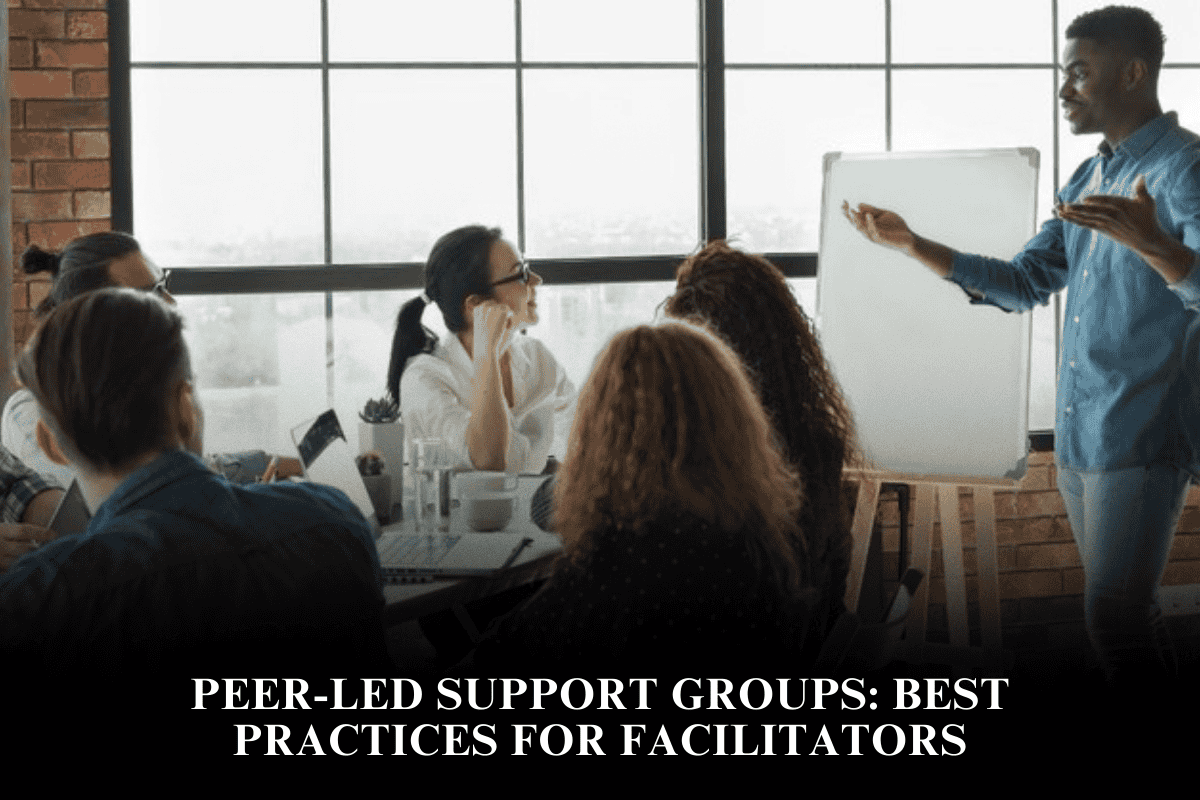
Facilitators play a crucial role in ensuring peer-led support groups are effective, safe, and supportive environments for participants. Best practices for facilitators focus on creating structure, encouraging participation, maintaining confidentiality, and fostering positive group dynamics that empower members.
Best Practices for Peer Support Facilitators
- Clear Goals and Guidelines:
Establish clear objectives for each session and set group norms or guidelines collaboratively with members, covering confidentiality, respectful communication, and participation expectations. - Create a Safe, Inclusive Environment:
Foster trust and psychological safety by actively encouraging respect, empathetic listening, and valuing diverse voices. Use ice breakers or check-ins to build rapport. - Effective Communication:
Use open-ended questions to promote sharing, ensure everyone gets an opportunity to speak, and provide thoughtful feedback. Actively listen and summarize key points to maintain focus and clarity. - Boundary and Role Clarity:
Clearly define the facilitator’s role as a guide rather than a therapist or expert. Maintain appropriate boundaries and redirect conversations constructively when needed. - Manage Group Dynamics:
Be attentive to dominant or withdrawn members, encouraging balanced participation. Address conflicts sensitively and maintain group focus by steering discussions toward the goals. - Provide Resources and Support:
Offer access to relevant tools, information, and referral networks. Be available for one-on-one support as necessary and encourage self-care practices among members and yourself. - Continuous Improvement:
Solicit feedback regularly to improve facilitation methods and adapt to the evolving needs of the group. Remain flexible and open to change.
FAQs
Q1: What is the facilitator’s main role?
A1: To guide discussions, ensure respectful participation, maintain boundaries, and keep the group focused and supportive.
Q2: How do facilitators create a safe space?
A2: By setting clear guidelines, encouraging empathy, active listening, and inclusive participation.
Q3: How can facilitators handle conflict?
A3: Address it calmly, mediate disputes constructively, and re-center on shared goals.
Q4: Why is feedback important for facilitators?
A4: It helps refine facilitation skills, improving group effectiveness and member satisfaction.
Q5: How do facilitators support members beyond sessions?
A5: By providing resources, referrals, and being available for individual support when needed.